The New Selling Economy
B2B selling is going through its biggest structural change in three decades — a mandate for selling teams to do things differently.
If B2B buying has changed, why hasn't what sales teams do? Despite a wave of AI tools, a rep's week, month, and quarter are still buried in everything around the moment — the deal, the escalation, the competitor, the forecast call, the pipeline.
AnyTeam is reinventing how B2B selling works for the AI era — and how organizations win in the Selling Economy.
Today's sales orgs were built for an era that's ending
A decade ago, the seller held the information — pricing, capabilities, customer stories. Buyers came to a meeting to learn, and the job was to inform. Now buyers arrive already knowing what we sell.
- Reads every review before the call
- Watches every competitor demo on their own
- Talks to peers in private channels
- Asks AI for the comparison matrix
- Still pitches what the buyer already knows
- Still opens with the same discovery
- Still scrambles for context mid-call
- Still loses the week to busywork
B2B sales still run on people
For B2B organizations, reps are the engine that makes the quarter. Hitting the plan means hiring, ramping, and replacing reps year over year. Does AI fix this — or just compound it?
Illustrative model for a typical scaling B2B sales org.
The cost is everything under AI
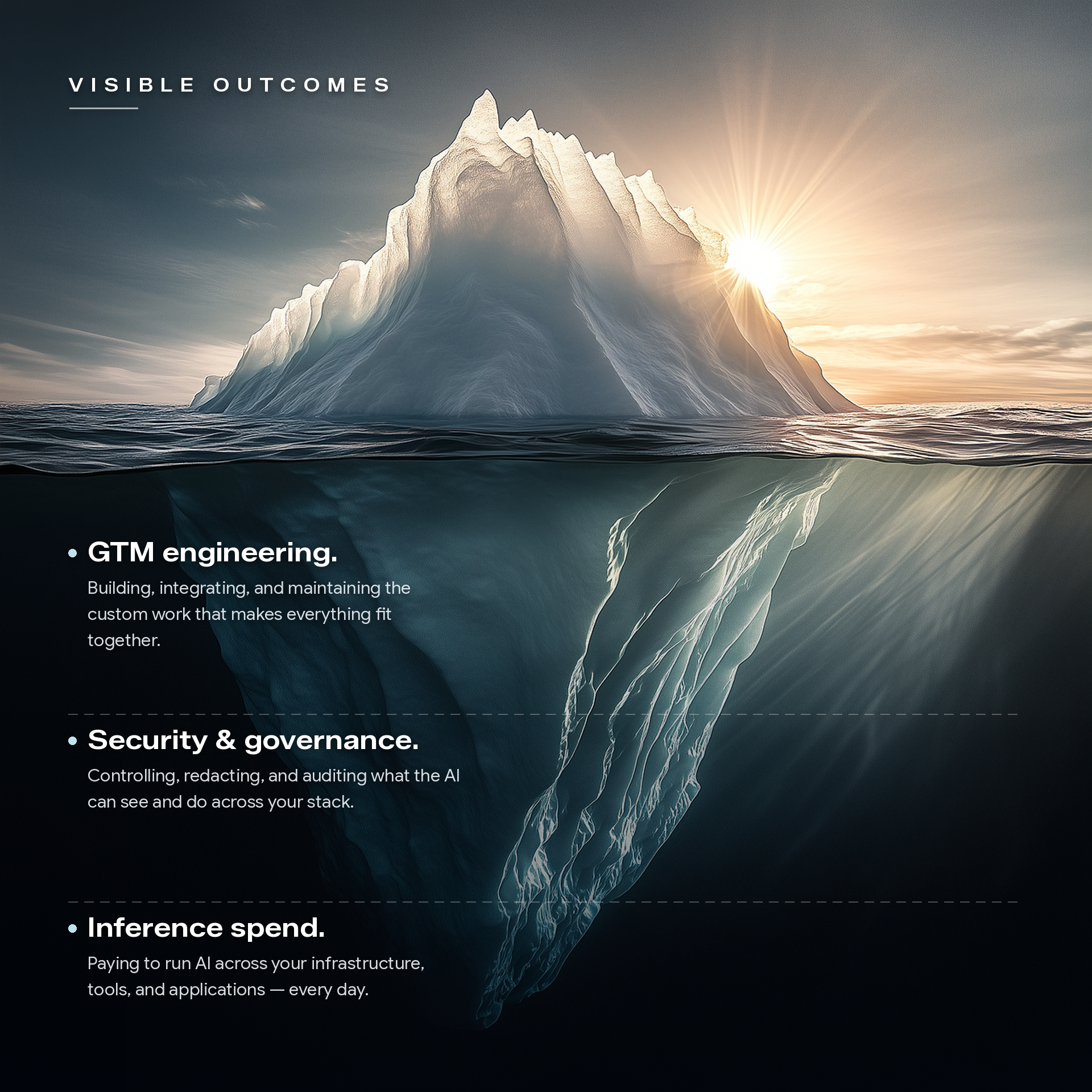
Bolting on AI creates custom work to make everything fit. The real cost is the engineering to build it, the security to govern it, and the inference you pay to run it everywhere.
Bolting on AI isn't free — it's metered, and it compounds.
$400K → $1.4M overnight.
One team's Claude bill jumped 3.5× the moment they crossed 150 seats — usage never changed, the pricing tier did. Salesforce now budgets roughly $300M a year in Claude tokens.
Source: investing.com, Techzine (2026).
Metered by the credit
AI is bolted on as credits, not seats — a diagram costs 5, an image 3, and none roll over. Run out and you buy an add-on. The AI bill sits on top of what you already pay per seat.
Source: Miro pricing & Help Center (2026).
More reps. More tools. Less selling.
If AI were really working for B2B selling, why is the sales tax still so high when CFOs report to Wall Street?
Figures are approximate, from recent public filings — source line to be finalized.
Reinventing how B2B selling gets done
The gap between winners and losers compounds every quarter. Winners become AI-first companies that reinvent how selling works. Losers do much of the same — and carry the tech debt for years.
- Build the company brain once — memory compounds
- One AI-native system across the stack
- Grow output per rep
- Selling time climbs every quarter
- Knowledge walks out the door when a rep leaves
- Bolt-ons stitched across 10–12 tools
- Add headcount to hit the number
- Busywork stays; tech debt grows
Selling Economy metrics
The old scoreboard measured activity and headcount — calls made, reps hired, pipeline added. The new one measures whether the system makes each rep, and the whole org, structurally more productive.
- Time to ramp: months → weeks
- Quota attainment: 42% → 78%
- Shared memory across the team
- ~70% of busywork converted to selling time
- 10–12 tools → 1 governed system
- +18 hrs/week back per rep
- S&M down as a share of revenue
- Higher output per rep
- Net new revenue per AE
Built on a new AI-native system — one company brain across the org.
A transparent value model, shown until named design-partner data is published.
What it takes to win
Four requirements separate the orgs built for the selling economy from the ones still adding tools and headcount.
Move the ~70% of busywork off the rep and into pipeline and customer conversations.
Knowledge accrues to the org — not to whoever holds the seat this quarter.
It works inside the calendar, email, CRM, and Slack — not as another silo to feed.
Grow output per rep, so go-to-market gets structurally more efficient — not just bigger.